
What is Environmental Enrichment?
Environmental enrichment refers to objects, experiences, or habitat features that encourage animals to engage in behaviors that are important to their physical and psychological well-being. Just as we enjoy exercise, puzzles, and chances to learn, animals also benefit from opportunities to challenge their bodies and minds.
If you have ever been to an accredited zoo or aquarium, you’ve probably seen environmental enrichment. Some of it might be immediately obvious, while other kinds might blend into the enclosure. From habitat features, such as a waterfall or rope swing, to toys such as balls and buoys, environmental enrichment is designed to stimulate animals physically, mentally, or both. Enrichment can also engage different sensory systems. For example, caretakers can use scents or sounds to encourage habitat exploration.
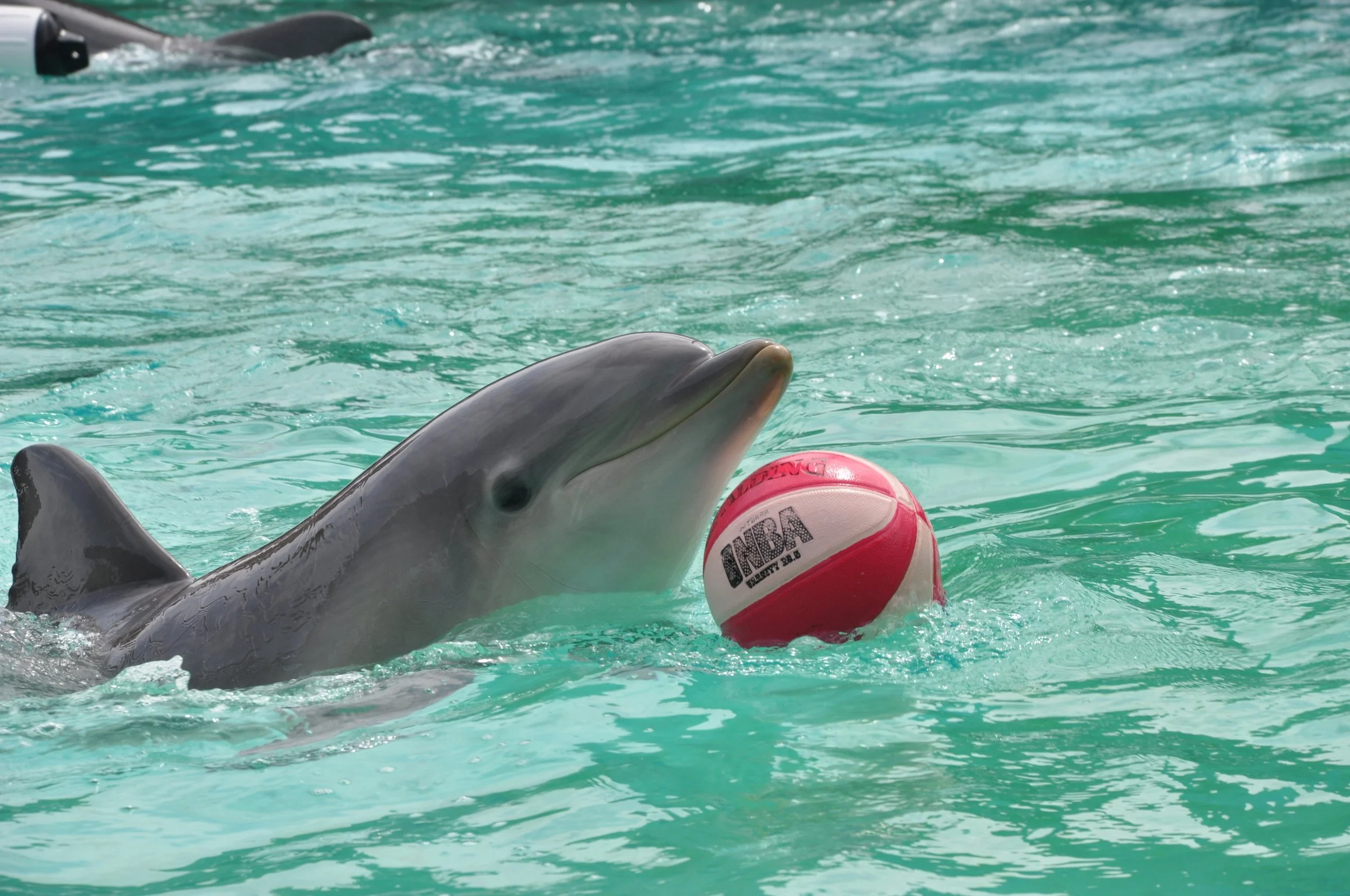
Basketballs are common enrichment devices for marine mammals, as they are durable and easy for the animals to toss. They can be used for solo play, or cooperative play with other animals or their caretakers.
It’s important to remember that animals evolved to occupy a particular niche. Locating food, finding mates, and avoiding predators shape animal behavior over generations. While some of these behaviors are governed by instinct, others lean heavily into cognitive flexibility and learning.
Accredited zoos and aquariums place animal welfare at the forefront of daily operations. Because animal care staff provide food, safety, and medical care, animals may have fewer opportunities to use some of the skills they evolved to solve challenges in the wild, such as locating food or avoiding predators. Caretakers take steps to provide opportunities for animals to explore, play, solve problems, make choices, and practice species-appropriate behaviors. Enrichment is one way to achieve those goals.
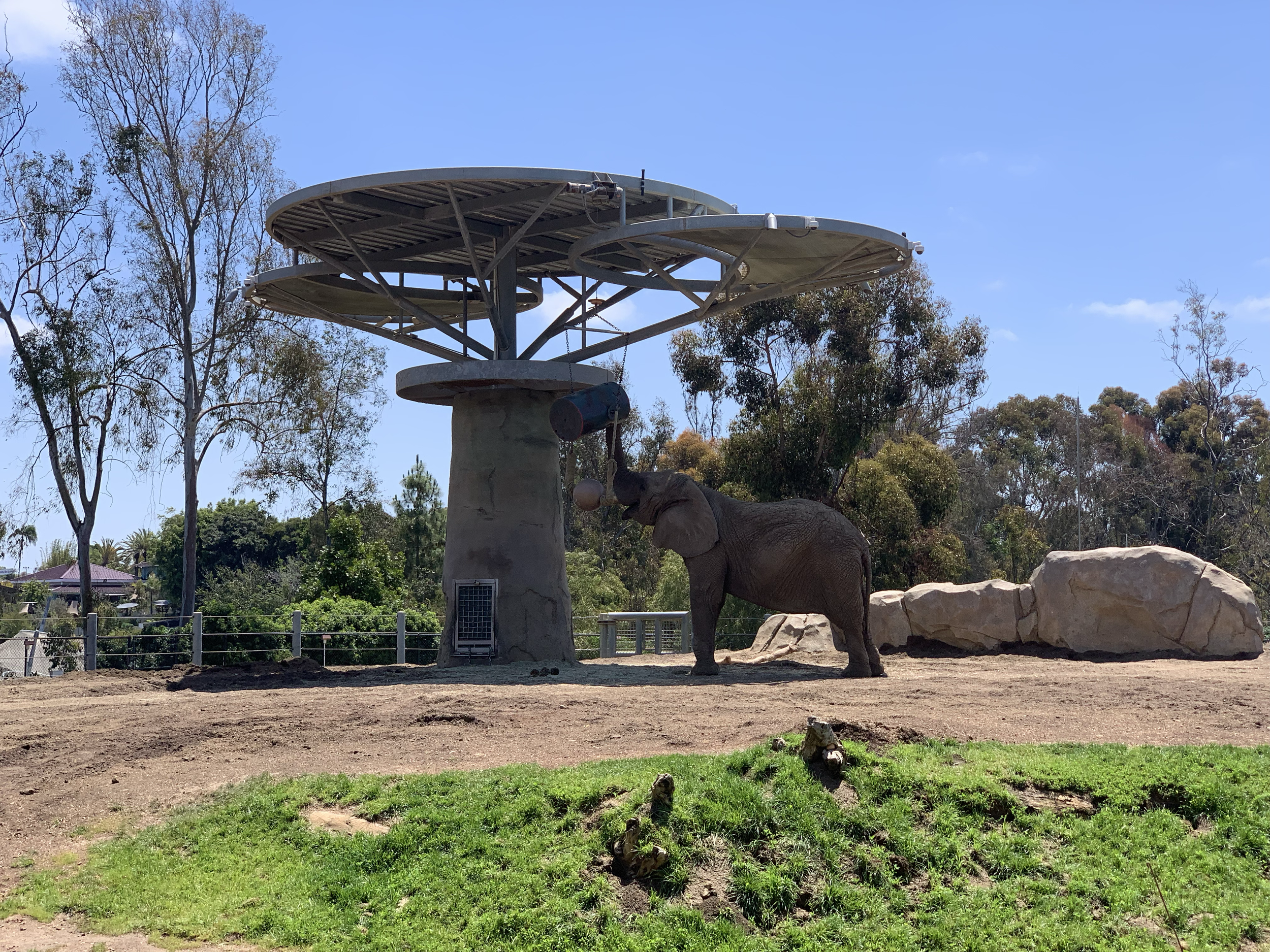
An elephant interacts with a large barrel that has been baited with food. Feeding enrichment can incorporate physical or mental challenges, while providing food rewards for interaction with the device.
Research has shown that well-designed enrichment programs are beneficial to animal welfare. These programs require more than putting new objects in the habitat and walking away, hoping the animals enjoy the additions. Animal care staff monitor how animals respond, making behavioral observations during and after the enrichment introduction. Designing enrichment around individual preferences can provide the greatest benefit to the animals.
Enrichment of the past focused primarily on occupying animals’ time. The goal was often to reduce stereotypic behaviors: patterned, seemingly purposeless behaviors that may indicate poor welfare. As animal welfare science became more established in zoological settings, there was a shift in emphasis toward encouraging naturalistic and species-specific behaviors.
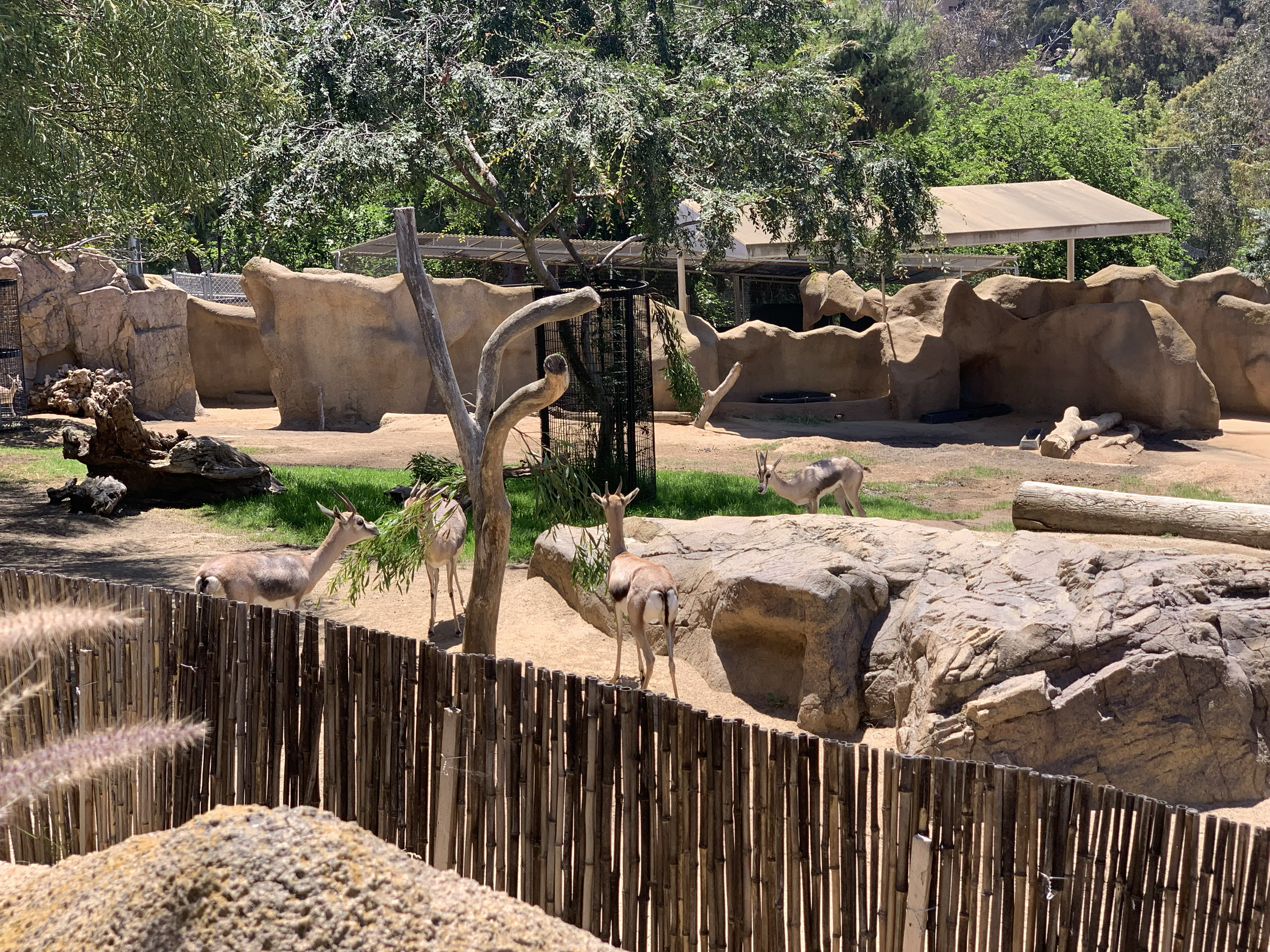
Caretakers can strategically place food, such as browse or vegetation for hoofstock, in the habitat to encourage natural foraging behaviors and provide variety in animal diets.
More recently, emphasis has expanded to include learning opportunities. For example, a recent study with dolphins showed that including cognitive problem solving into foraging enrichment sessions resulted in better scores on welfare metrics, such as fewer stereotypic behaviors. Positive reinforcement-based training sessions can also serve as enriching experiences. Animals can learn to voluntarily participate in their healthcare, which reduces stress and safety risks. They can learn concepts that challenge their problem-solving skills, or high-energy behaviors that provide physical exercise.
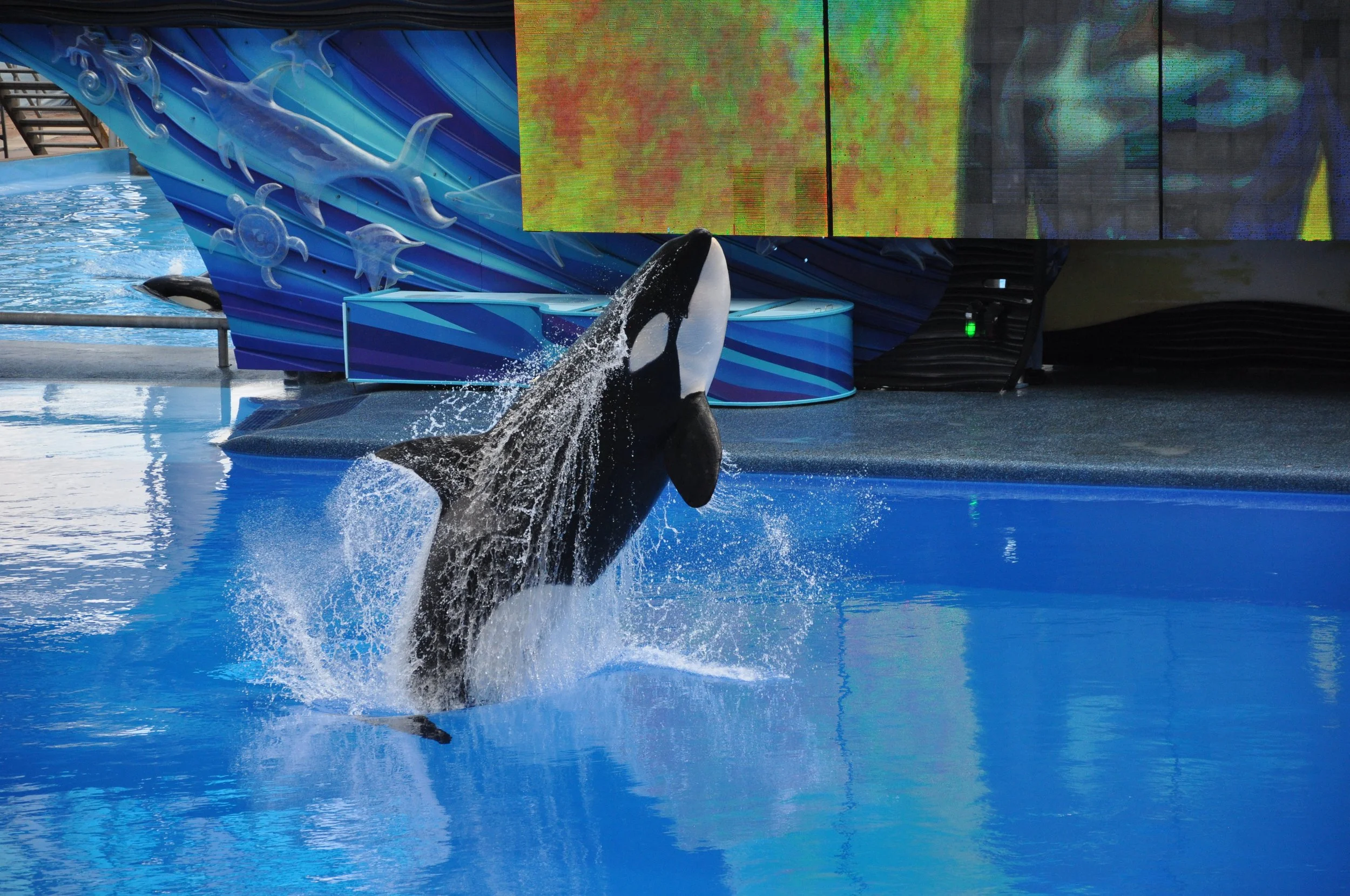
While visually stunning, aerial and high energy behaviors provide animals with physical exercise. Additionally, learning these impressive behaviors provides mental stimulation.
Enrichment practices continue to change and adapt, with the goal of animal welfare at their core. As research into this area expands, caretakers are better able to provide enrichment that is engaging to the animals. Technology will continue to play important roles in zoological settings, whether through tracking animal interaction with enrichment activities and habitat usage, facilitating individualized enrichment and care, or providing animals with opportunities to choose and control aspects of their environment.
Resources
Newberry, R. C. (1995). Environmental enrichment: Increasing the biological relevance of captive environments. Applied Animal Behaviour Science, 44, 229–243.
Shepherdson, D. J., Mellen, J. D., & Hutchins, M. (Eds.). (1998). Second Nature: Environmental Enrichment for Captive Animals. Smithsonian Institution Press.
Mellen, J., & MacPhee, M. S. (2001). Philosophy of environmental enrichment: Past, present, and future. Zoo Biology, 20, 211–226.
Alligood, C., & Leighty, K. (2015). Putting the “E” in SPIDER: Evolving trends in the evaluation of environmental enrichment efficacy in zoological settings. Animal Behavior and Cognition, 2(3), 200–217.
Hoy, J. M., Murray, P. J., & Tribe, A. (2010). Thirty years later: Enrichment practices for captive mammals. Zoo Biology, 29, 303–316.
Clark, F. E. (2017). Cognitive enrichment and welfare: Current approaches and future directions. Animal Behavior and Cognition, 4(1), 52–71.
Hoy, Julia M., Peter J. Murray, and Andrew Tribe. "The potential for microchip‐automated technology to improve enrichment practices." Zoo biology 29.5 (2010): 586-599.
Clegg, I. L., Domingues, M., Ström, E., & Berggren, L. (2023). Cognitive foraging enrichment (but not non-cognitive enrichment) improved several longer-term welfare indicators in bottlenose dolphins. Animals, 13(2), 238.
